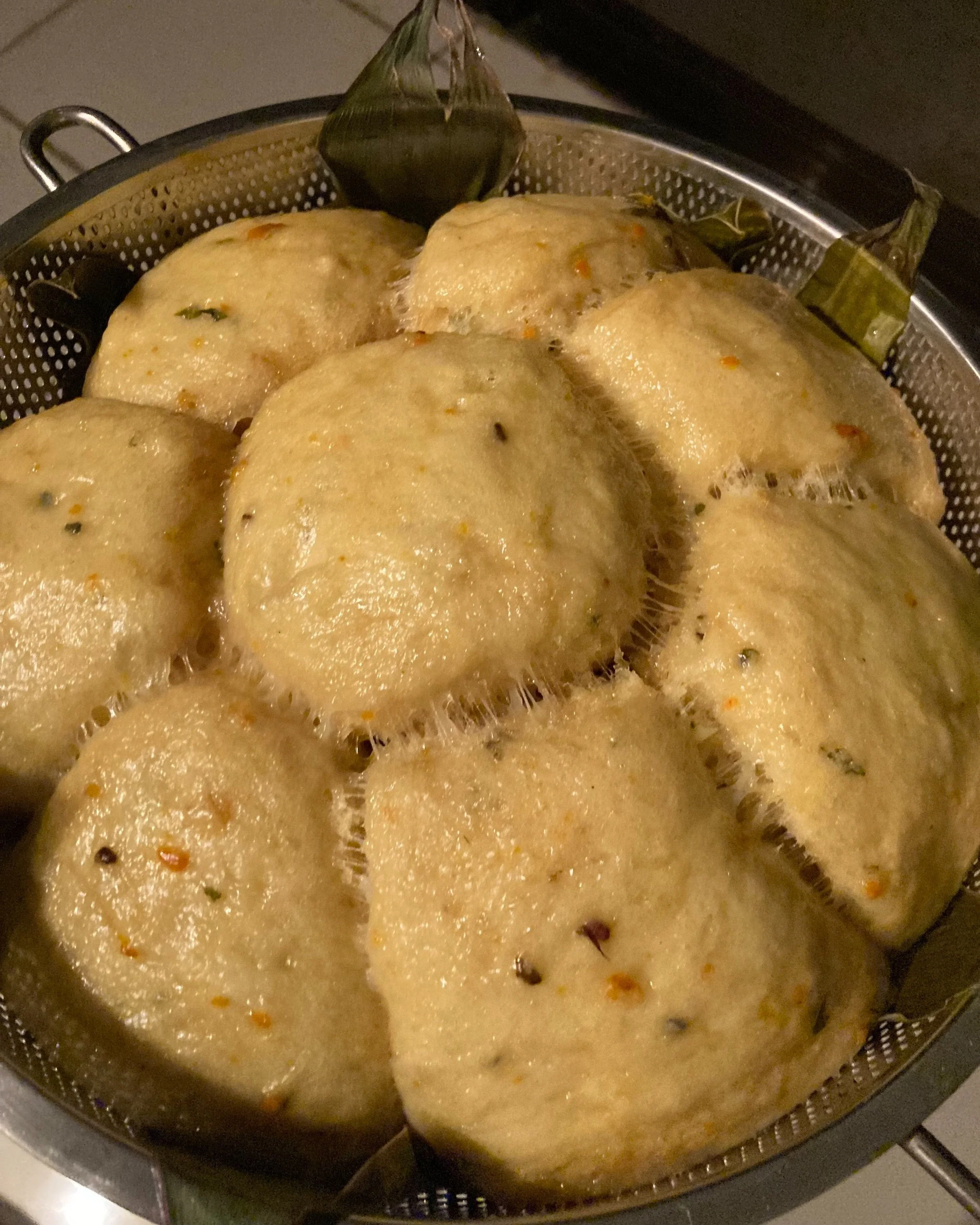
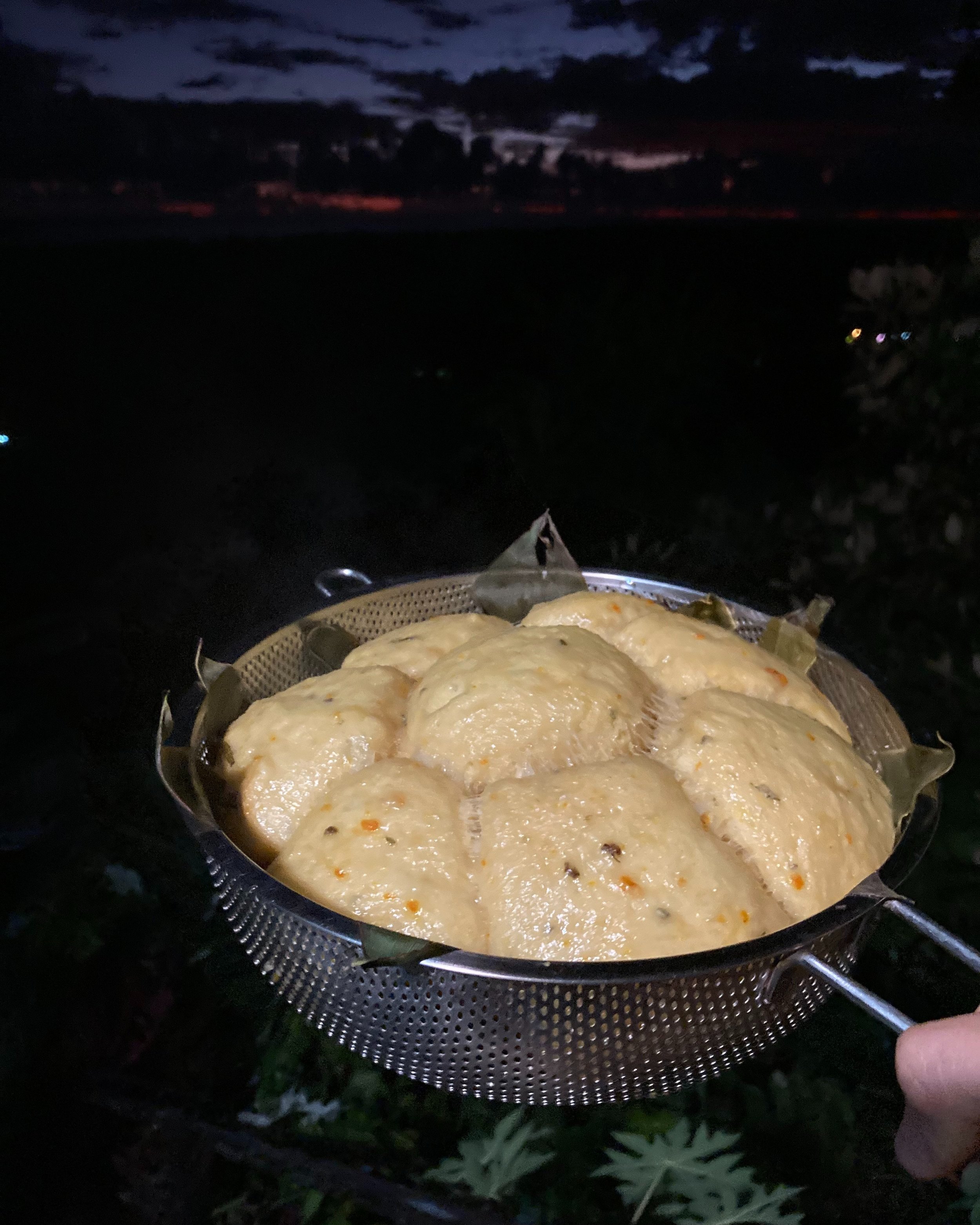
Turmeric Sweet Bread for Día de Muertos (Steamed buns)
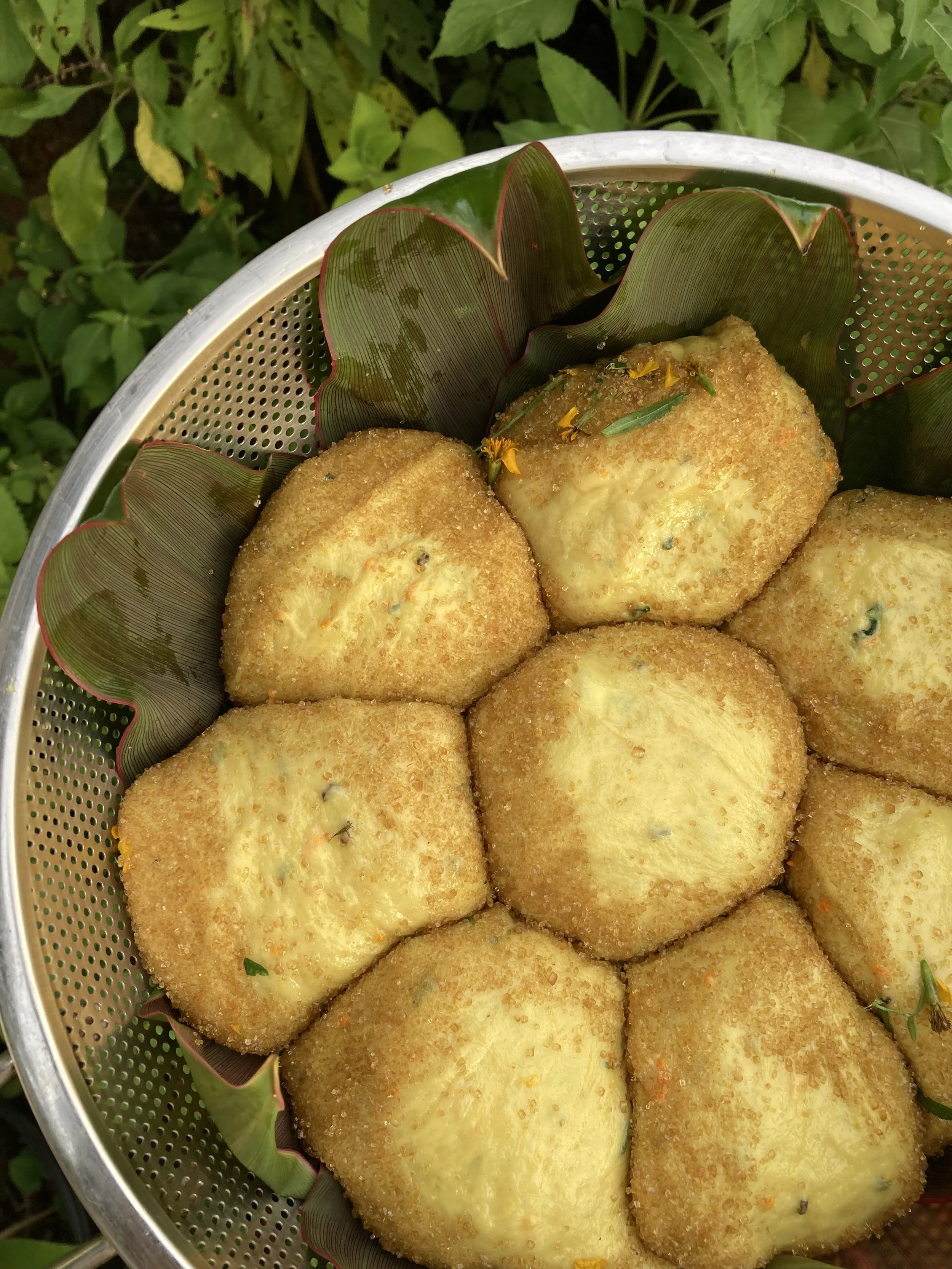
Here is my special Día de Muertos seasonal recipe.
I’ve been making steamed bread like this for about four years now. It’s one of my favorite treats. Steaming bread doesn’t require any alteration to an oven baked bread recipe, other than the baking part. But all the ingredients are the same, method is the same, and cook time is even the same. The bread won’t develop a crust on top like oven baked bread does, obviously, but it has that lovely, steamed bread softness which I love. It makes me feel nostalgic for certain east Asian cuisine.
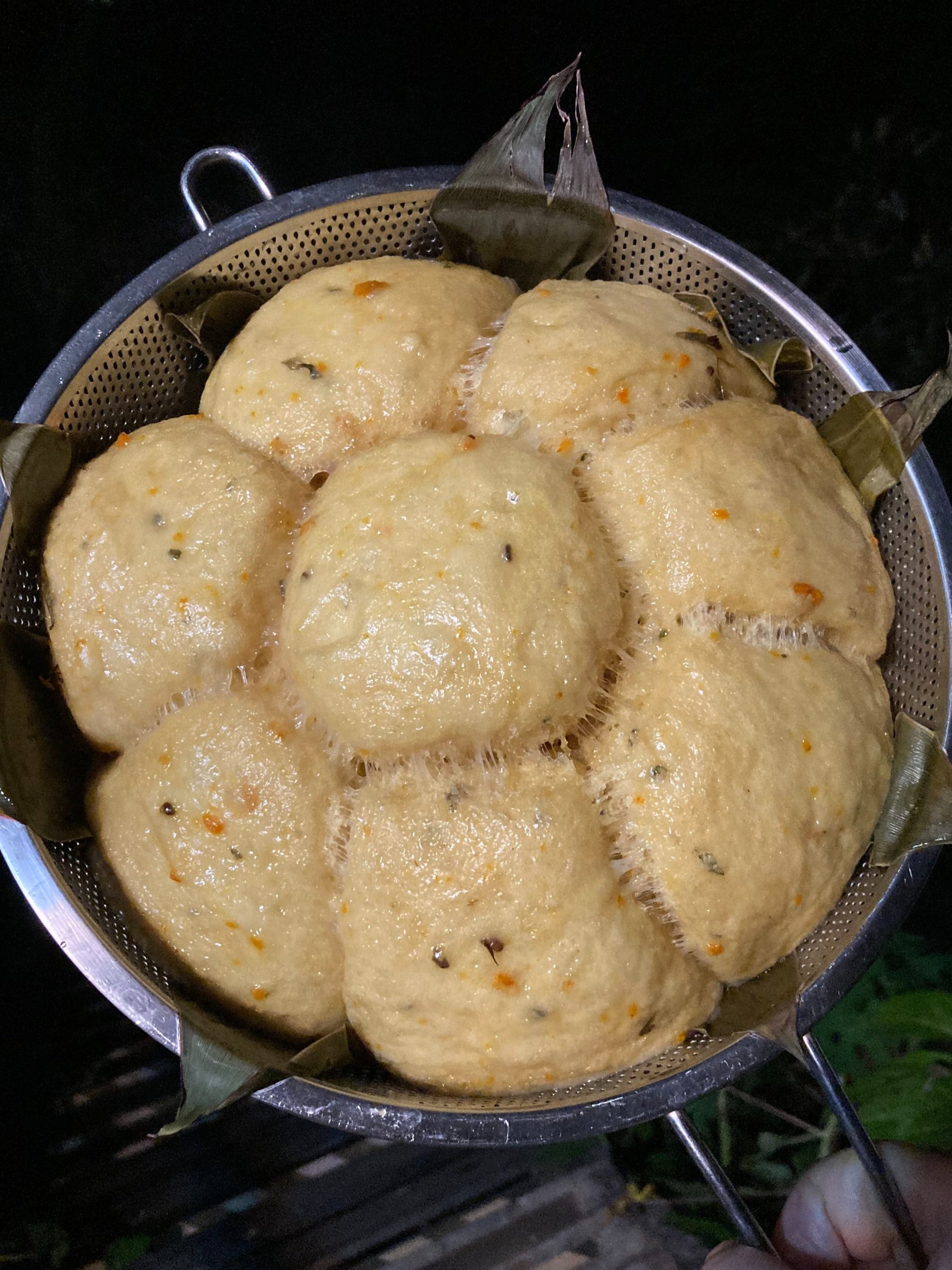
This is a delicious, sweet bread with warming herbs and spices. I used the darker green variety of ti here to contrast the yellow tint that the turmeric gives to the bread.
Alternatives to the ti leaves could be banana leaves, corn husks, noni leaves, or hoja santa leaves (Piper auritum).
This recipe also works as a loaf. You do not have to separate the dough into buns. You can make any number of buns or any shape of loaf you like. The bread will take the shape of the steamer basket, depending how large your steamer basket is.
Ingredients
1 1/3 c warm water
2 tsp active dry yeast
2 tsp brown sugar
2 tsp salt
3 tbsp olive oil
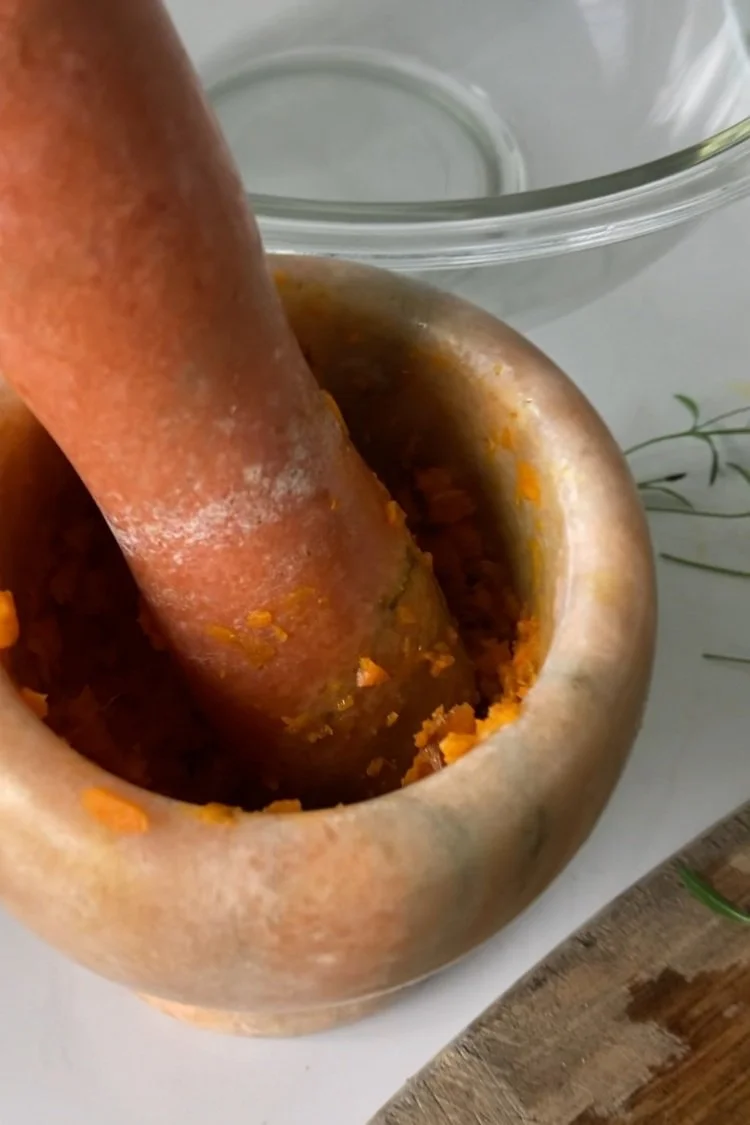
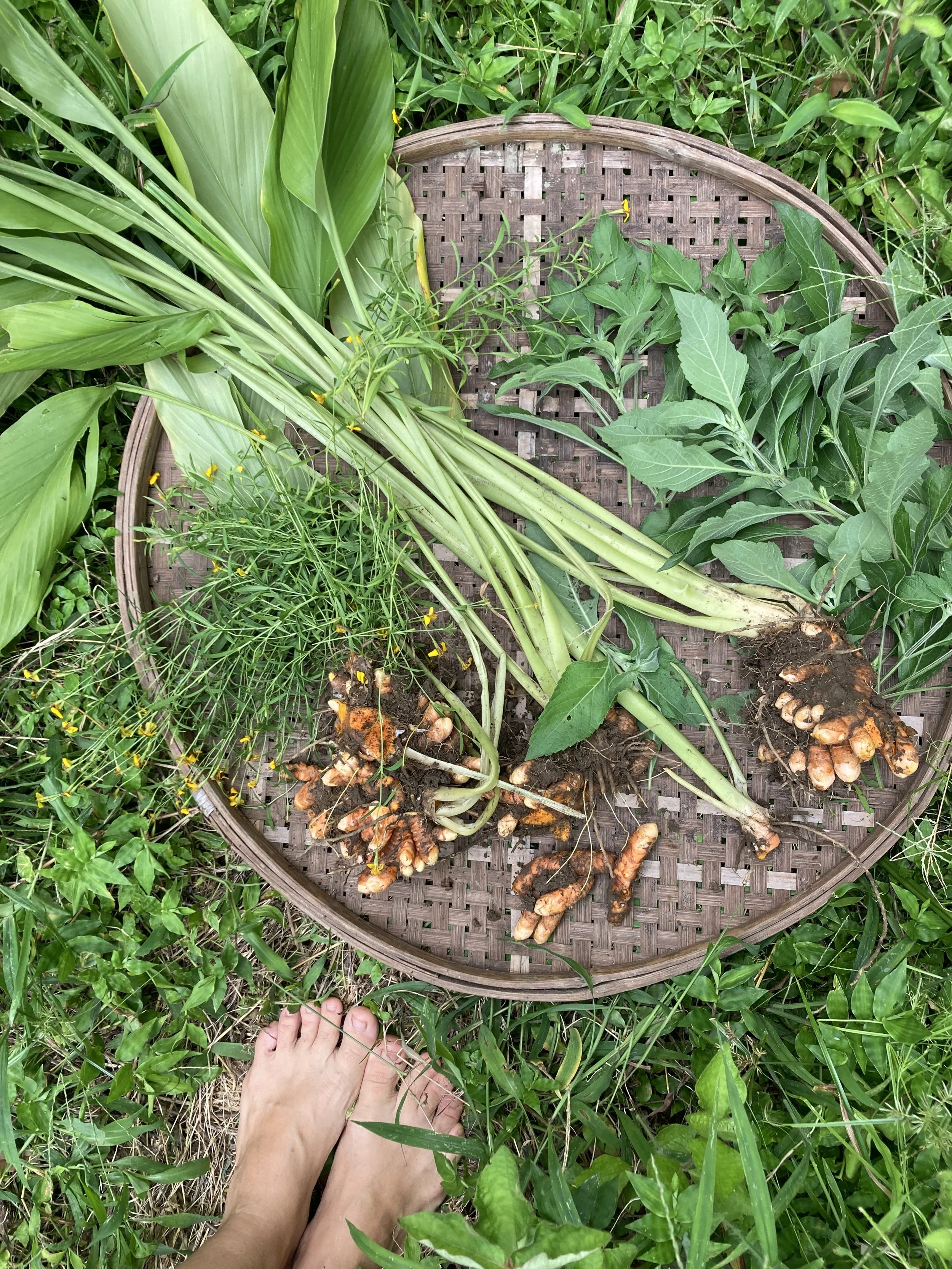
2 tbsp fresh turmeric, mashed in a molcajete
1 tbsp fresh vana tulsi, finely chopped
1 tsp ground cinnamon
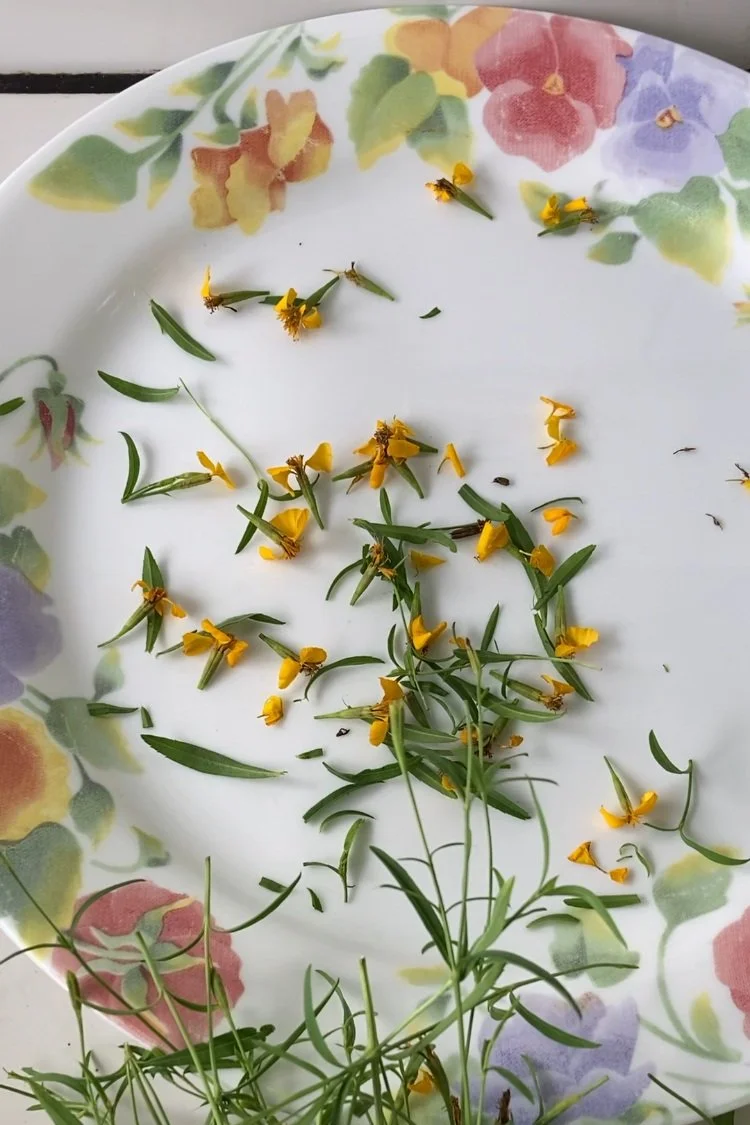
2 tbsp Tagetes lucida flowers and chopped leaves
1 c brown sugar
4 c flour (+ 1/2 c for flouring your kneading surface)
9 ti leaves (larger green leaf variety)
1/2 cup brown sugar + 1 tbsp Tagetes lucida flowers (for coating the risen buns)
Method
Bloom the yeast in warm water and sugar for five minutes.
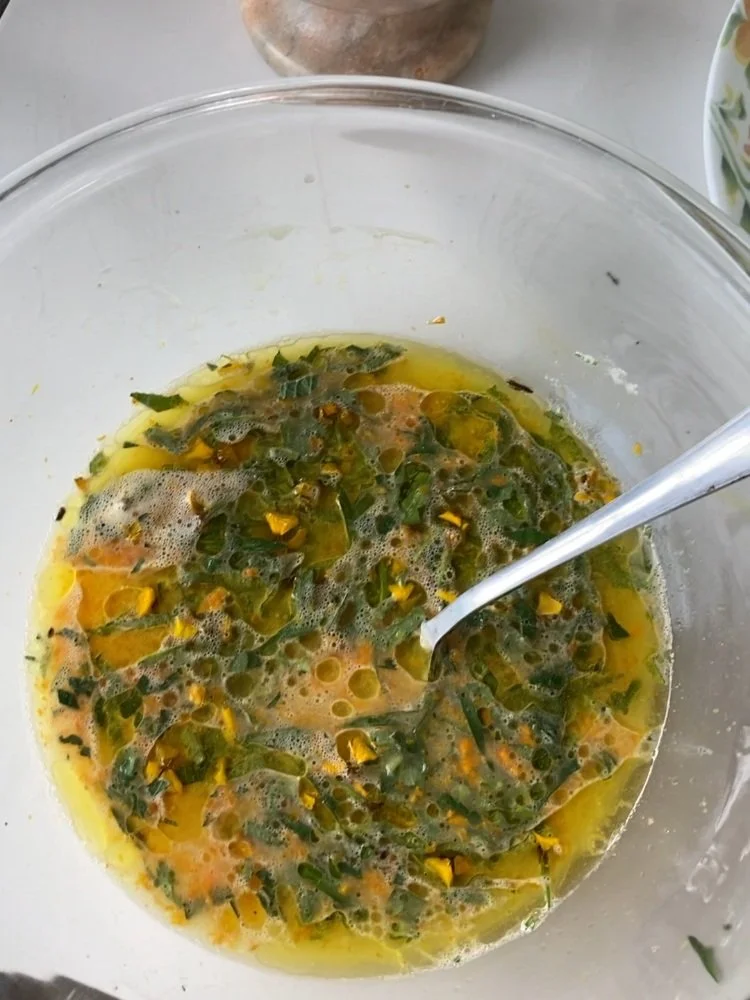
Mix all ingredients except flour and ti leaves together in a large bowl.
When the sugar is dissolved, add the flour one cup at a time until incorporated.
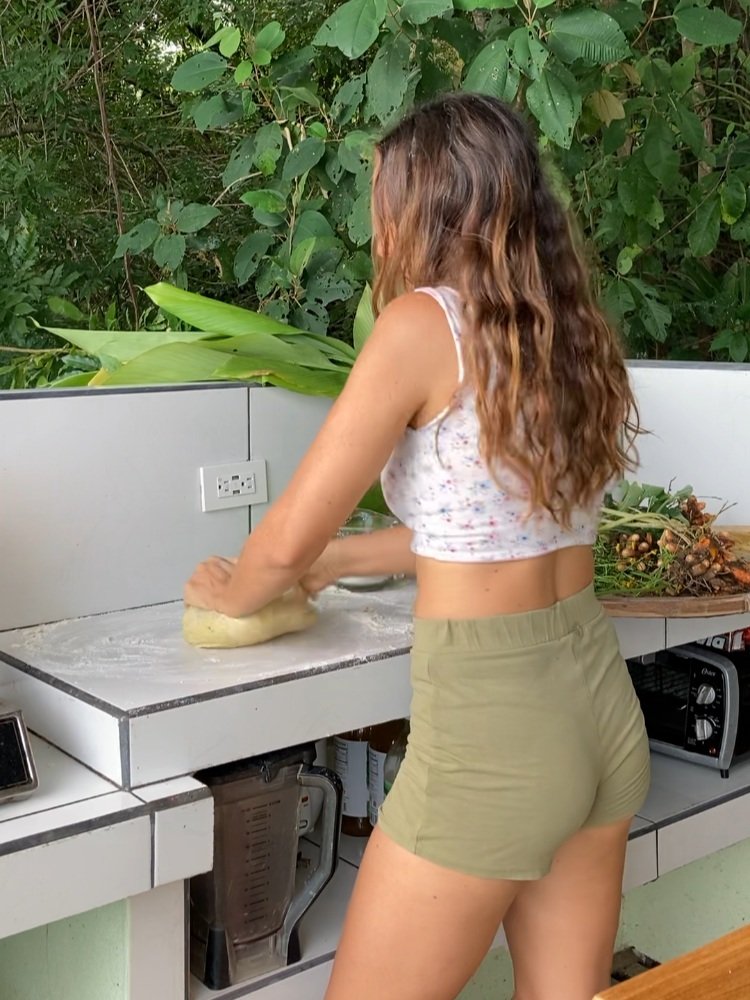
When the dough comes together, knead for 8-10 minutes on a floured surface until smooth and elastic. (This dough is a big tough to knead by hand, but I did it! A stand mixer would be handy.)
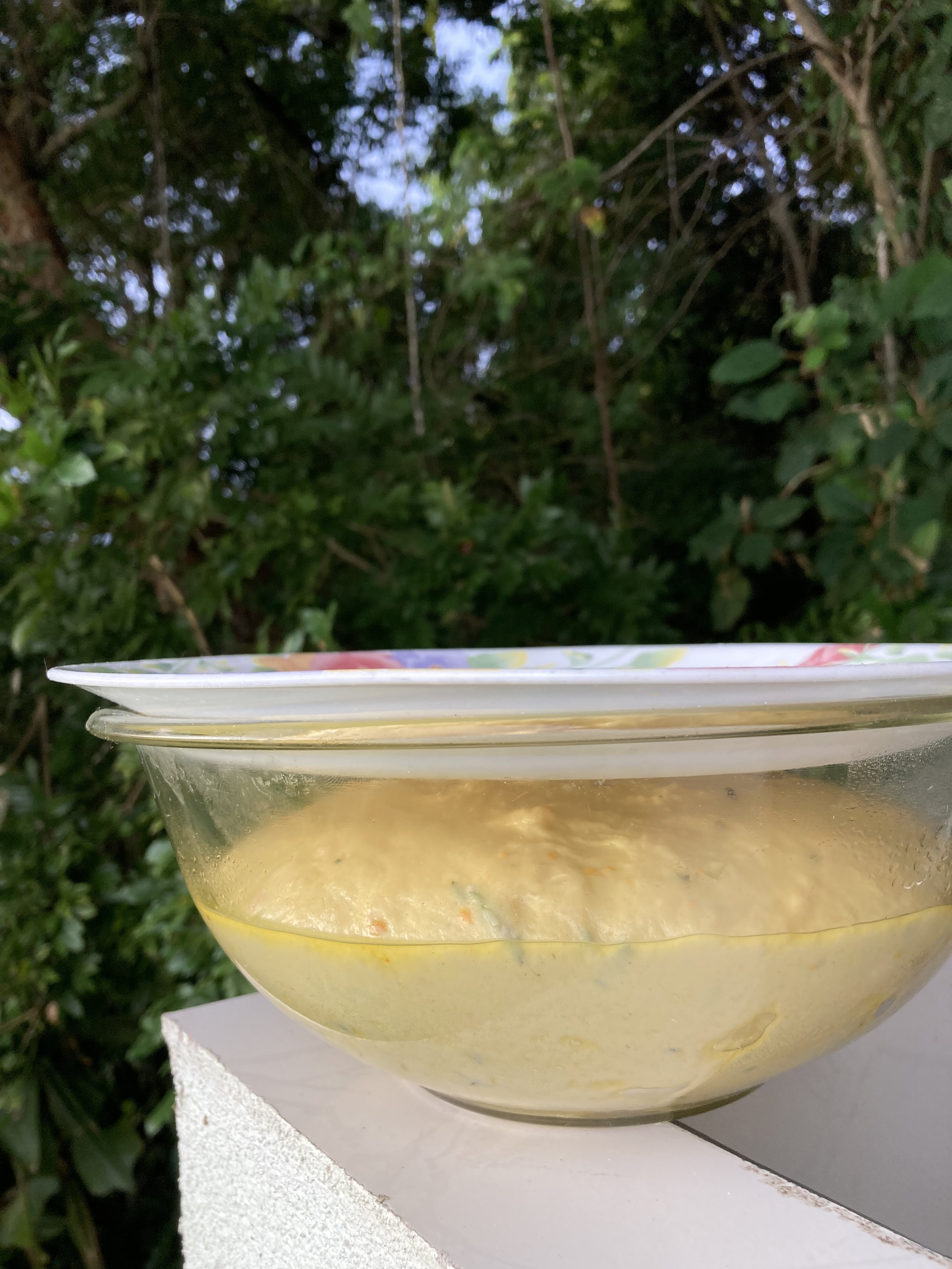
Put dough ball in an oiled bowl with a plate or towel on top. Rise for 1-2 hours or until doubled in size.
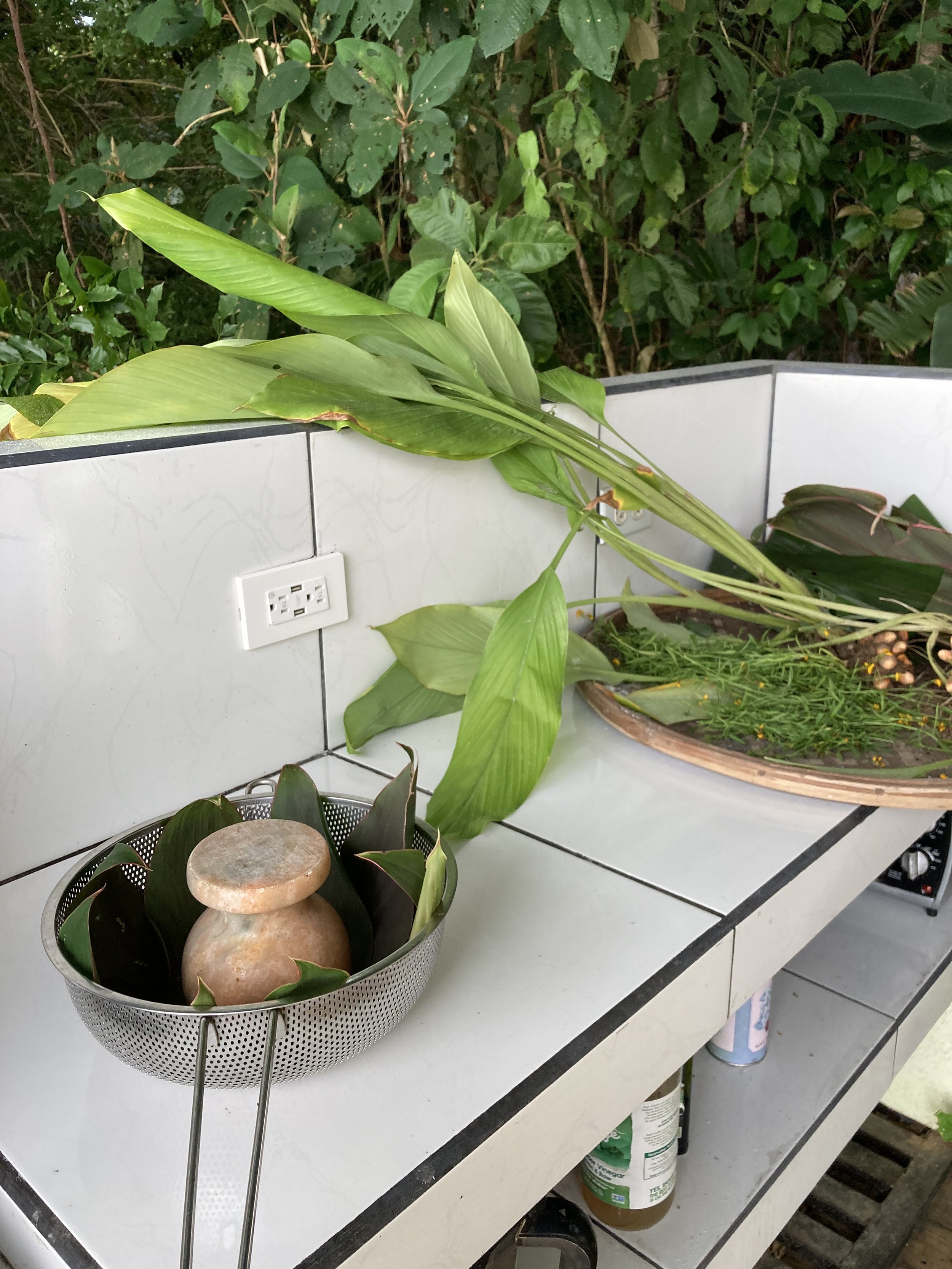
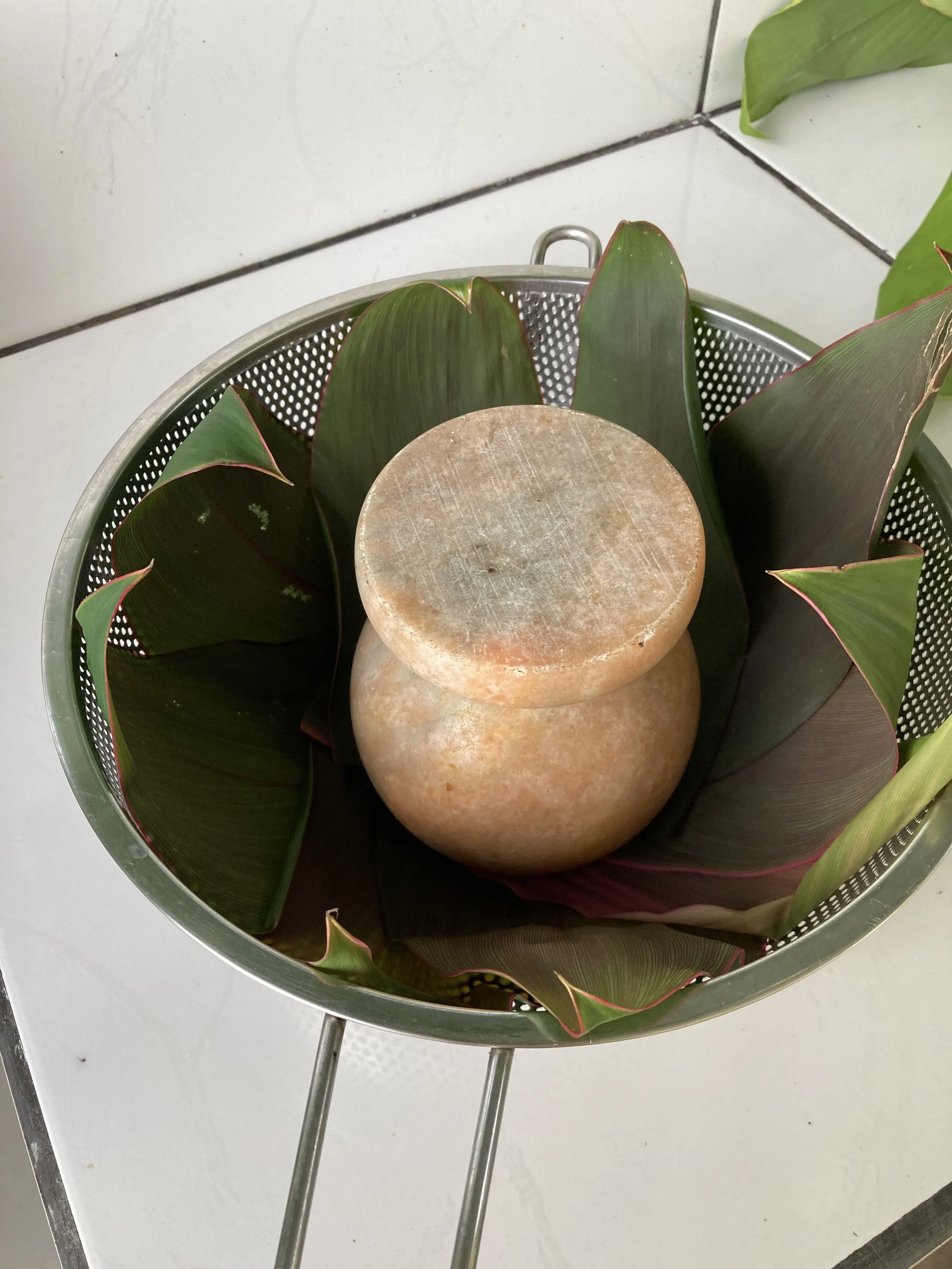
During this time, line a steamer basket with ti leaves or your leaves of choice and set aside. (Scroll down to see photos and more instructions on this.)
After the dough has unmistakably risen, punch the dough ball to release the air and separate dough into 8 equal buns.
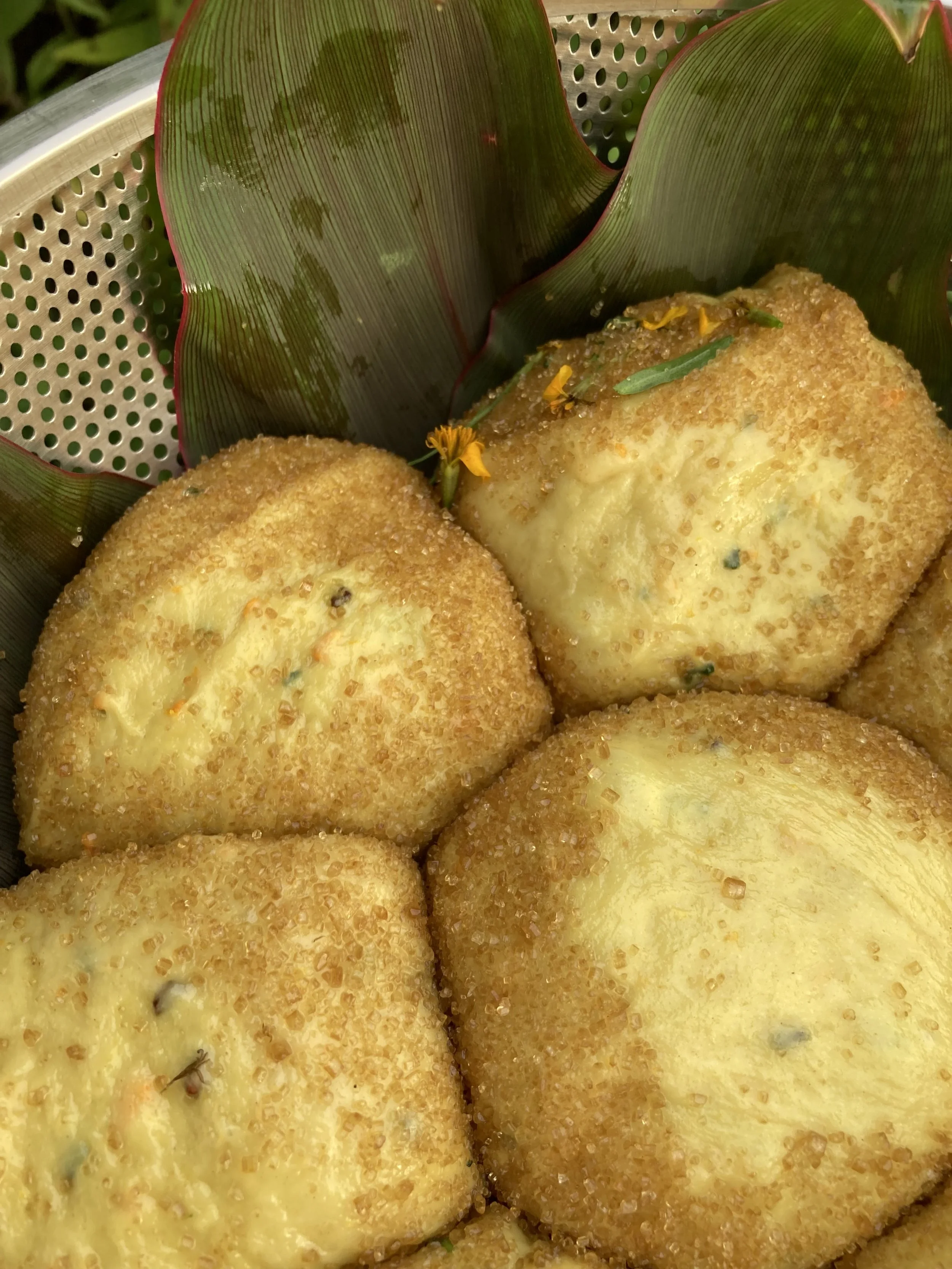
Roll the sides of each bun in the brown sugar with Tagetes flowers and then arrange in the steaming basket as desired. (I put one in the center and rest around it in a flower shape.) Cover and rise for 30 more minutes.
About 15 minutes into the second rise, bring a big stew pot to a rolling boil with at about 5-6 inches of water. Make sure the water level is at least an inch below where the bottom of the steamer basket will rest.
Place steamer basket in the stew pot above the water and cover with a tight-fitting lid (preferably one that is dome shaped) for 40 minutes.
Maintain the rolling boil for 40 minutes, do not adjust the temperature. 5-6 inches of water is enough to make it through 40 minutes.
Remove steamer basket from heat and allow the bread to cool completely before removing from the bread from the basket and cutting. The buns pull apart pretty easily, but you can also use a bread knife to slice this any way you prefer to serve the bread.
Ti Plant (Cordyline fruticosa)
Ti is a non-toxic, edible and medicinal plant with many uses, though it is widely cultivated in the tropics as an ornamental and popular landscaping plant. There are several cultivars. In my garden I grow the bright pink and the dark green with pink edges.
The very young, tender leaves of ti are said to be edible. The root has been used in Hawaiian culture to make alcohol and fermented drinks.
The leaves work really well for steaming. I use them for tamales, steamed biscuits, and steamed bread. The leaves have no noticeable flavor and don’t transmit their color to the food.
To make the radial design pictured above, you’ll need 9 ti leaves. I harvested the tops of two ti plants and then cherry picked the best, brightest leaves from those tops. I cut the leaves from the stems of the plant and then cut the bottom third off each leaf. Then I arranged the leaves in a radial design using my molcajete as a weight to hold the leaves down.